A Journey Through Time: My Field Cameras from Canon A1 to Nikon Z7 II
My career in the geosciences allowed me to put my photographic knowledge and skills to good use. Over the years I have had the pleasure of using some great, and not so great, cameras. The best of these I have held onto as a slowly growing collection.

By David Hodgetts
Published On 2023-06-03
A Journey Through Time: My Field Cameras from Canon A1 to Nikon Z7 II

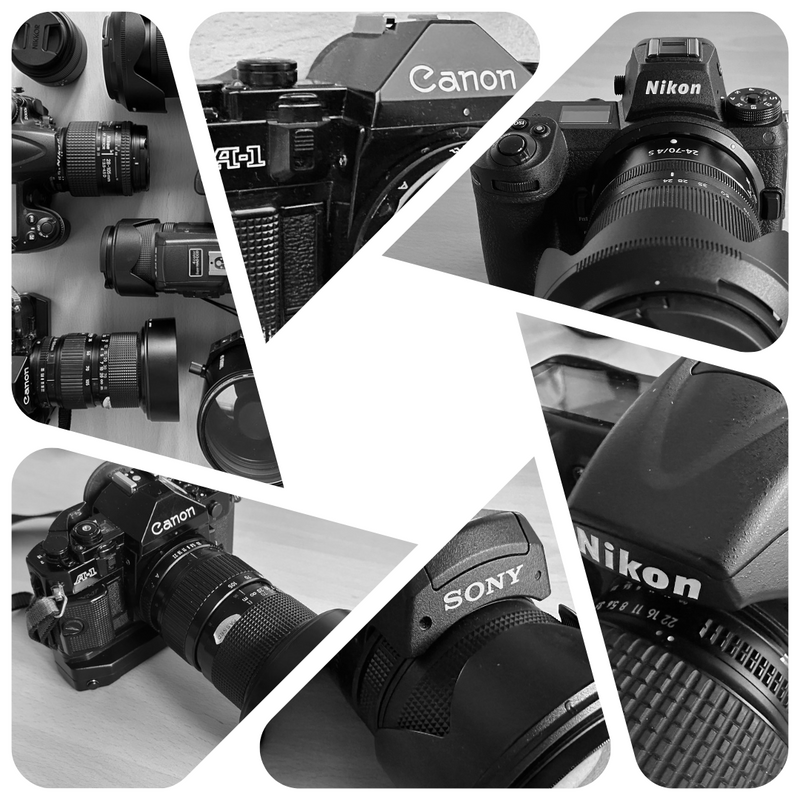
In my photographic journey as a geoscientist, I've had the pleasure to use and witness the evolution of camera technology, from the traditional 35mm film cameras to the advanced mirrorless systems of today.
My initiation into the world of photography began with the Russian-made Zenit TTL. This 35mm SLR camera was rugged, reliable, and most importantly, taught me the foundational skills of photography. The Zenit TTL's mechanical simplicity, manual controls, and affordability were its biggest strengths. It offered the perfect platform for understanding the basics of exposure, forcing me to think before each shot.
My career in geosciences allowed me to put my photographic knowledge and skills to good use. Over the years I have had the pleasure of using some great, and not so great, cameras. The best of these I have held onto as a slowly growing collection. Among these are my trusty and much-loved Canon A1, then after using a T90 for a short time I got my first decent digital camera, the Sony DSC F828. After a brief foray into using a variety of compact cameras, I bought my first DSLR, the Nikon D300S. Finally, I have been using the mirrorless Nikon Z7 II for the past few months.
Let’s look at each of these in turn:
1. Canon A1 (1978)
The Canon A1 was a trailblazer in its time, being one of the first cameras to offer automatic exposure modes. As a 35mm film camera, the A1 provided a tangible, tactile experience that digital cameras can't quite replicate. Every frame shot was a commitment, creating an emphasis on getting the composition and settings right, which honed my skills as a photographer.

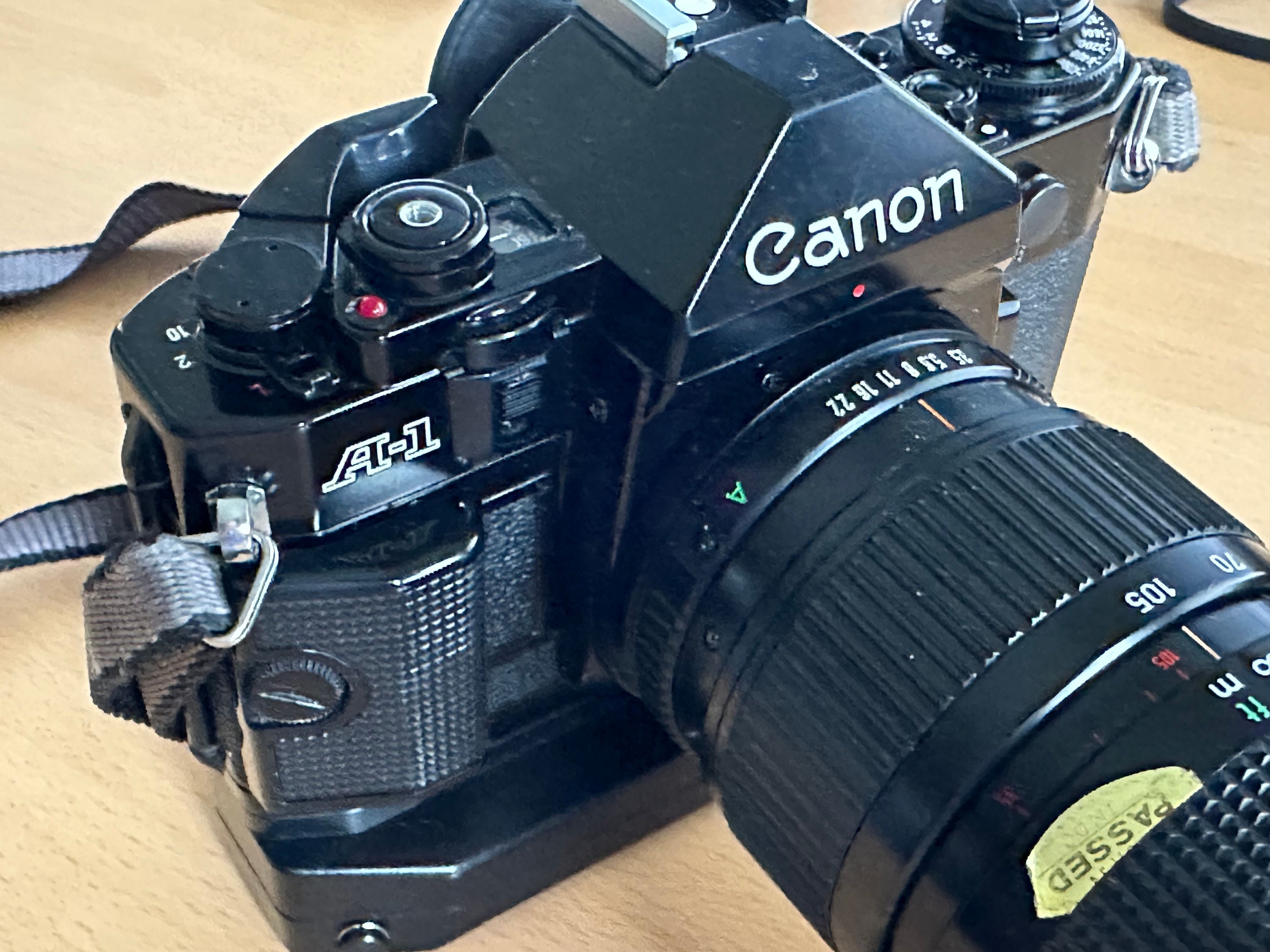
The Canon A1 first released in 1978.
The A1's solid build, fantastic lens line-up, and the aesthetic qualities of film were its strengths. The Canon A1’s mechanical reliability and simplicity were appreciated by many photographers, providing an authentic shooting experience. The downsides were the costs and inconveniences associated with film: buying it, developing it, and not being able to see your results instantly.
2. Sony DSC F828 (2003)
Fast forward a few decades, and I transitioned to digital with the Sony DSC F828. This camera was one of Sony's early ventures into the digital realm. With its unique swivel design, 8-megapixel resolution, and a 28-200mm equivalent lens, it offered quite an upgrade from film.
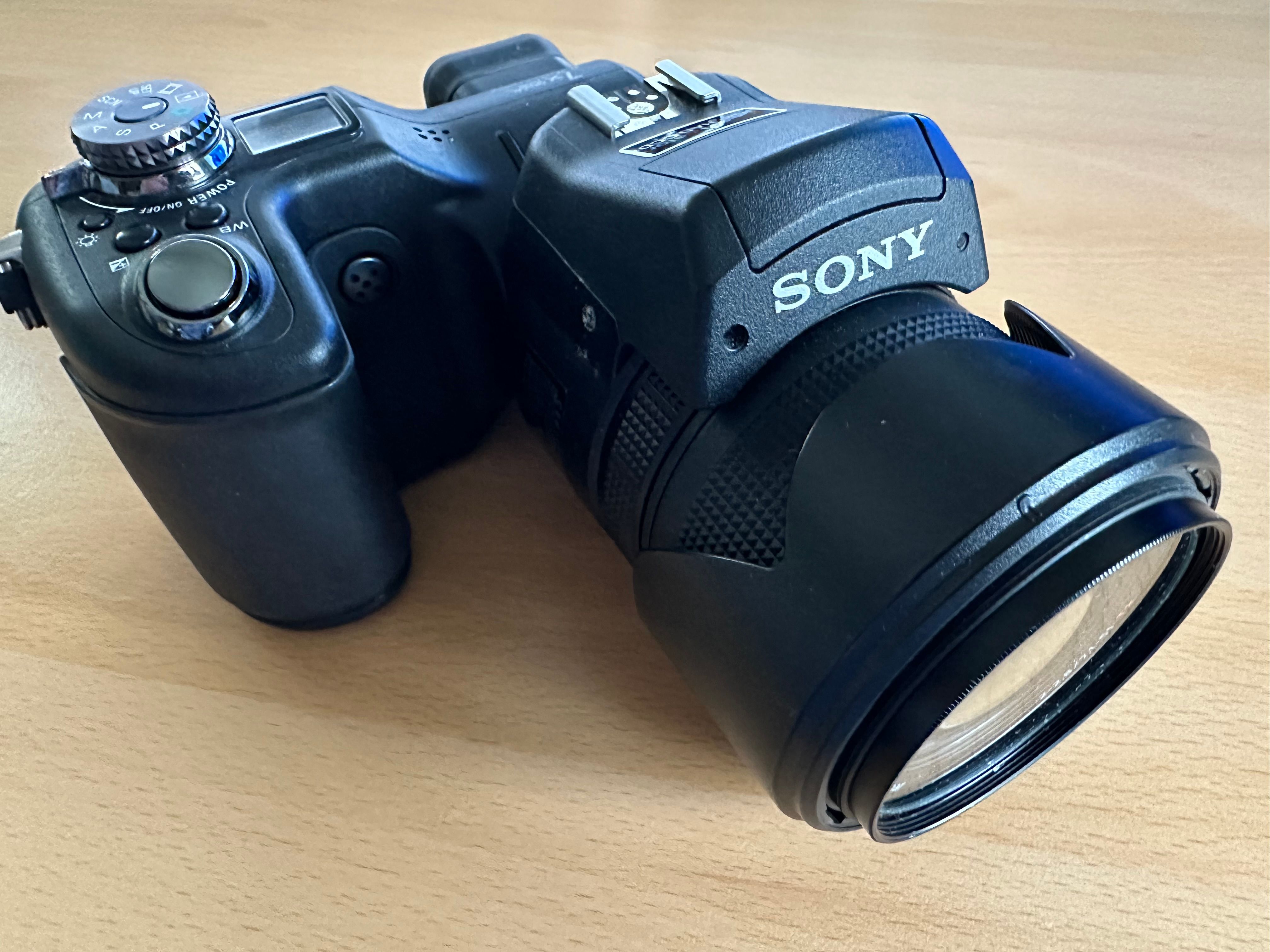
The Sony DSC F828 released in 2003.
The F828 provided the convenience of digital photography – immediate feedback on images, ease of sharing, and cost-effectiveness in the long run. However, the image quality, especially in low-light conditions, was subpar compared to modern standards. Also, its unique design could be a little awkward to handle for traditionalists.
3. Nikon D300S (2009)
Stepping into the world of DSLRs, the Nikon D300S was a game-changer. This APS-C sensor camera offered a 12.3-megapixel resolution and excellent low-light performance. Its robust build and ergonomic design were a hit among photographers.
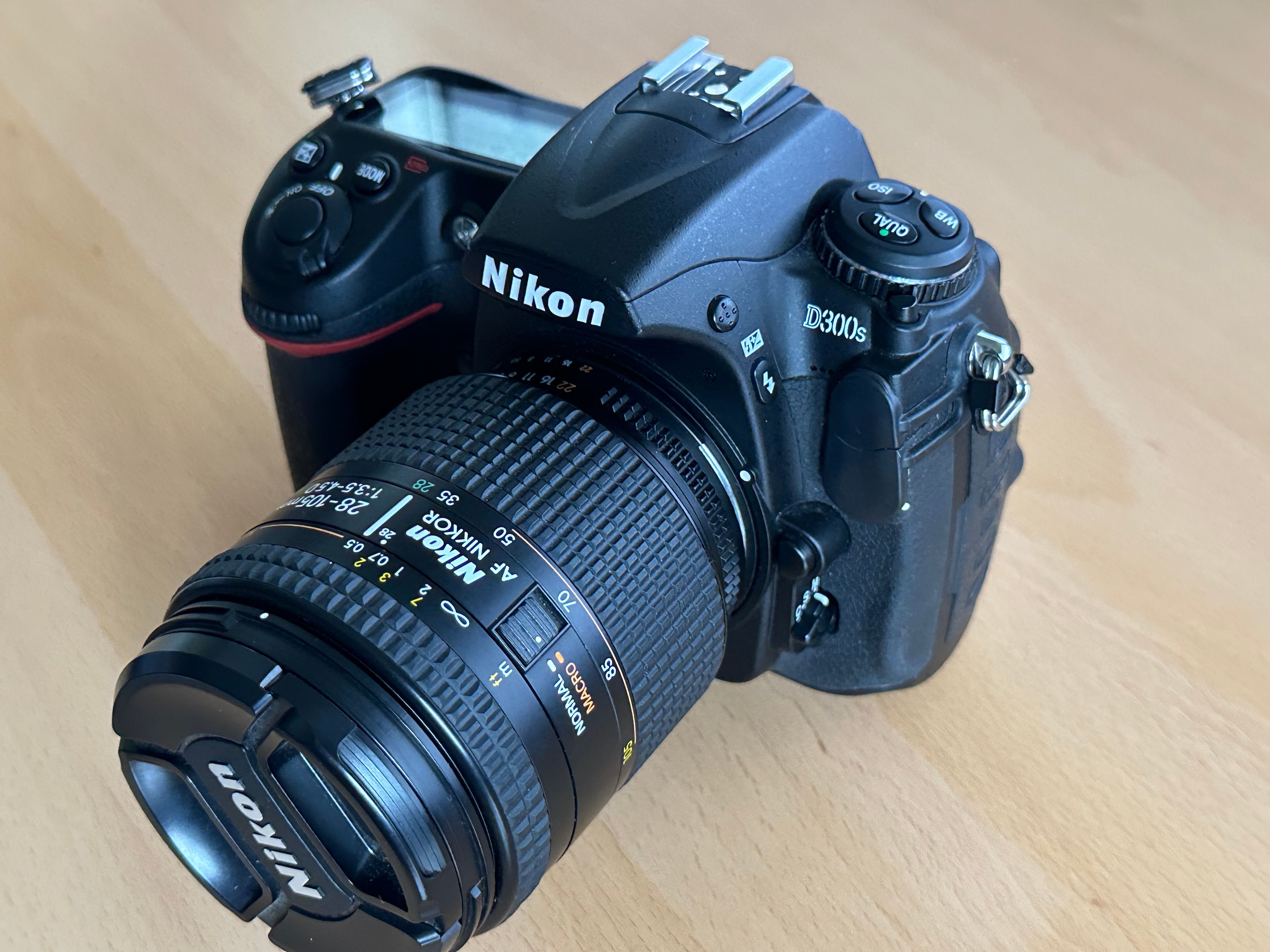
The Nikon D300s DSLR from 2009
The DSLR technology allowed for higher image quality, enhanced low-light performance, and provided a vast, high-quality, lens selection. The optical viewfinder provided a ‘what you see is what you get’ experience. The main drawbacks of the D300S and DSLRs in general are size and weight. They are bigger and heavier than their mirrorless counterparts.
4. Nikon Z7 II (2020)
Finally, we arrive at the present with the mirrorless Nikon Z7 II. This full-frame camera boasts a 45.7-megapixel sensor, 4K video capability, and in-body image stabilisation, representing the cutting edge of camera technology. Mirrorless cameras like the Z7 II are lighter and more compact than DSLRs and offer faster burst rates and silent shooting.
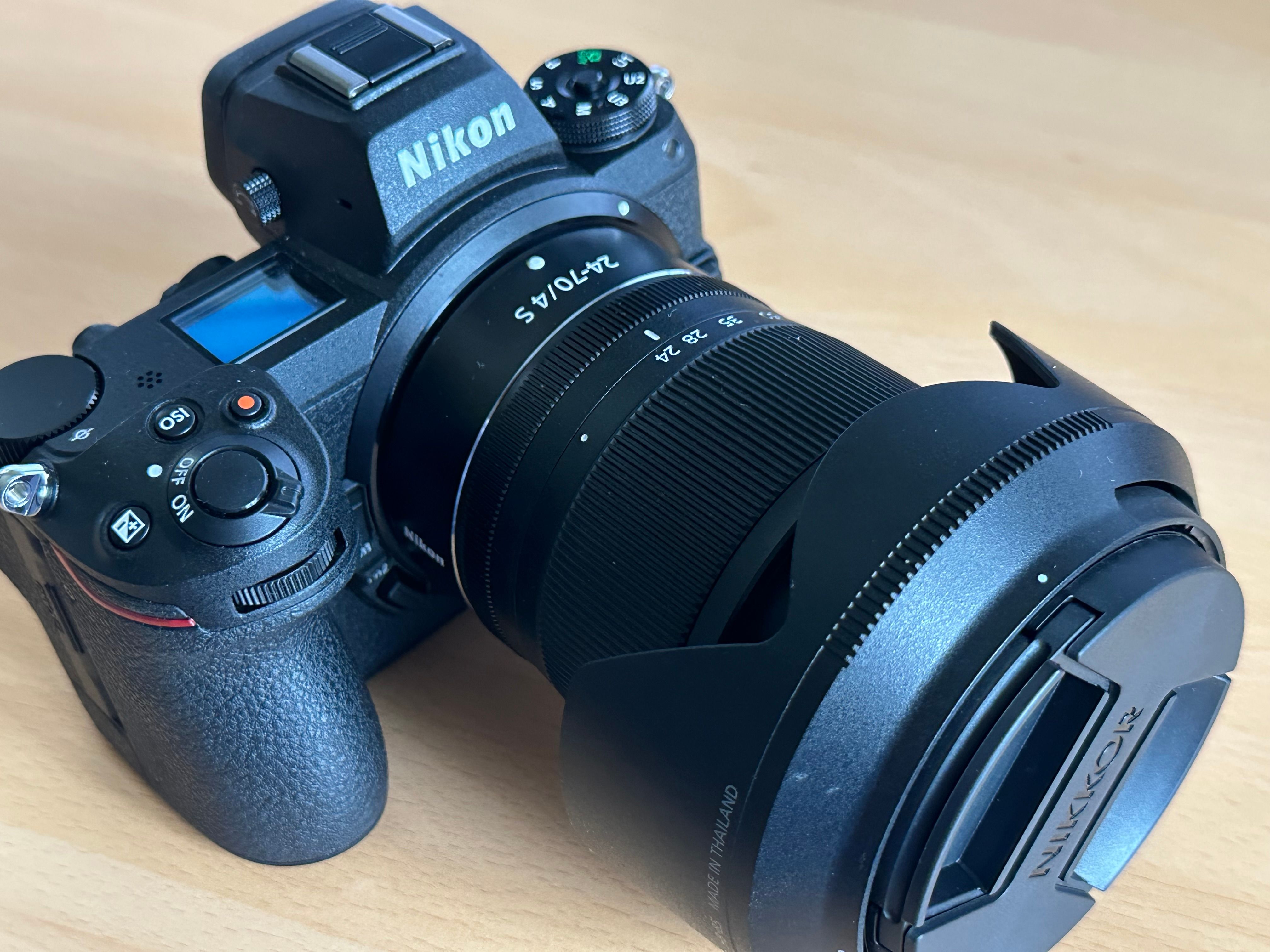
The mirrorless Nikon Z7ii from 2020.
The electronic viewfinder provides real-time exposure previews, which is a huge advantage. The battery life of mirrorless cameras tends to be shorter due to the constant use of the electronic viewfinder or LCD screen. Also, while growing, the selection of lenses specifically designed for mirrorless systems hasn't matched the extensive selection of DSLR lenses, especially in the 2nd hand market.
Conclusion
From 35mm to mirrorless, each camera technology has its unique charm and challenges. As we've seen with the Canon A1, 35mm film cameras offer an organic, visceral connection to photography, teaching us to value each shot. However, they come with the constant cost of film and lack the convenience of immediate feedback.

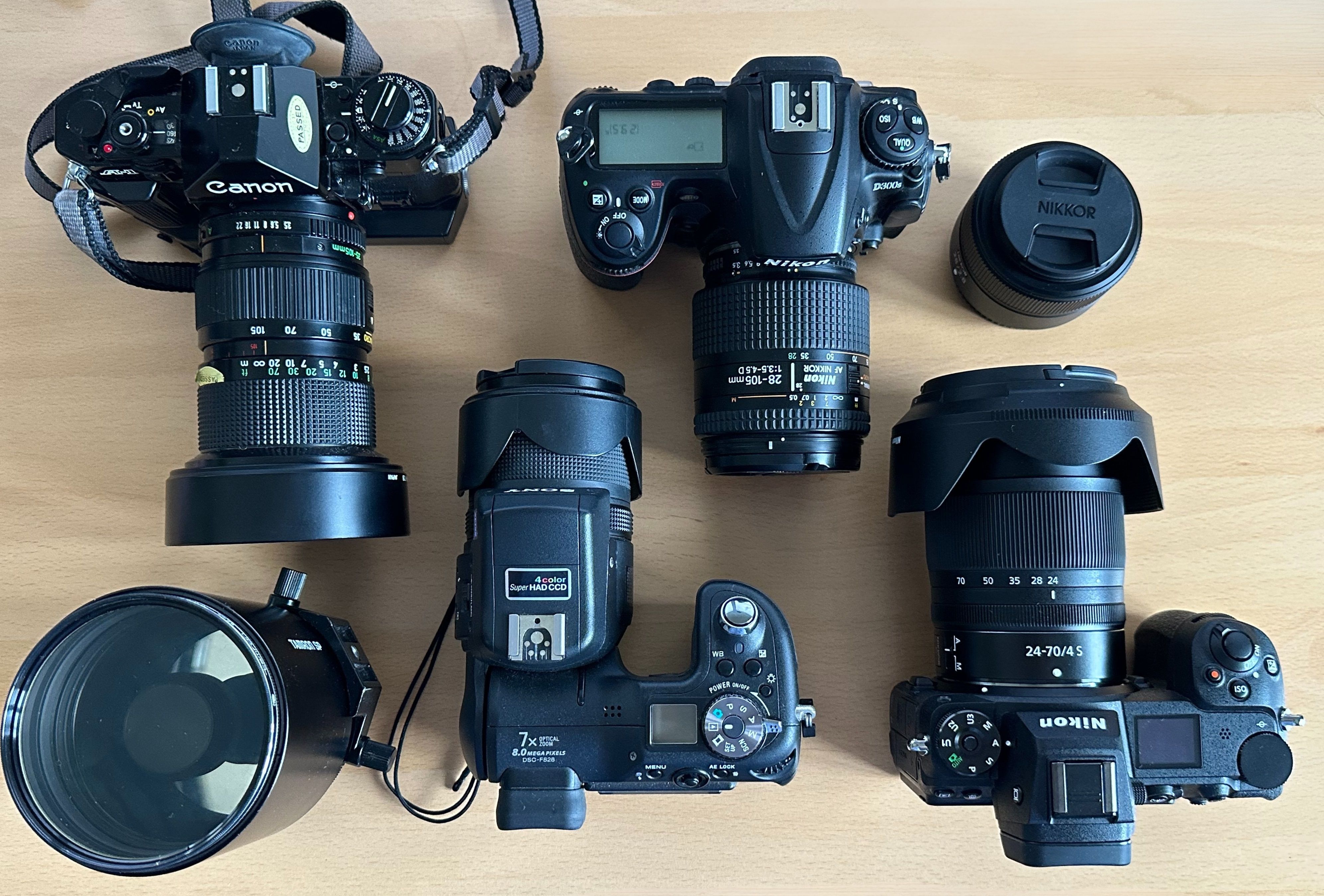
The collection of field cameras.
With the advent of digital technology, cameras like the Sony DSC F828 democratised photography. They made it more accessible and affordable in the long run, though the early digital models had their teething problems in terms of image quality and handling. Of course, we could take as many images as we needed to and check them while in the field.
DSLRs such as the Nikon D300S, brought a significant improvement in image quality and performance. The vast selection of lenses and the 'what you see is what you get' optical viewfinder has made DSLRs a preferred choice for many professionals. Their bulkier design compared to mirrorless counterparts is a downside to consider.
In the mirrorless realm, cameras like the Nikon Z7 II bring us the benefits of compact design, fast shooting speeds, and an electronic viewfinder that offers exposure previews. However, shorter battery life and a still-growing lens lineup are points of consideration when choosing a mirrorless camera.
In essence, there is no definitive 'best' camera technology. Your choice will depend on your personal preferences, style, and photographic needs. As we look to the future, we eagerly anticipate the continued evolution of photographic technology and the promise of new ways to capture and celebrate our world in all its stunning detail.
I will, of course, look forward to getting my next camera!
Latest Articles